
Wide-Input DC-DC Converters: What 2:1, 4:1 and 12:1 Mean
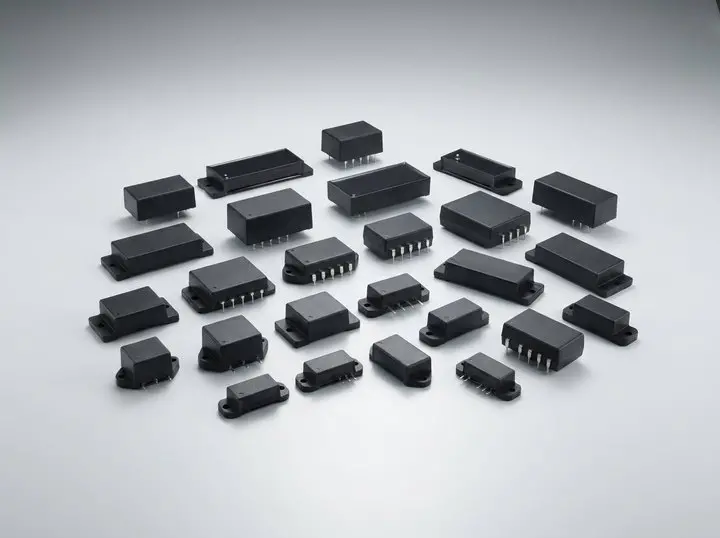
Isolated DC-DC converters are usually sold by input range ratio — 2:1, 4:1 or wider. The ratio is simply the highest permitted input divided by the lowest, so a 9–36 V part is 4:1 and an 18–36 V part is 2:1. It looks like a convenience feature. It is really a design decision.
What the ratio buys you
A wide range lets one part number cover several nominal system voltages, which cuts the number of variants you stock. It also absorbs the reality of battery-fed and vehicle systems, where a nominal 24 V rail may sag well below 20 V under crank and rise above 30 V on charge. If your input genuinely moves, a wide-range part removes a whole class of intermittent fault.
What it costs
- Efficiency varies across the range. A converter is optimised somewhere in its window, and is usually least efficient at the low-line end, where input current is highest.
- Input current at minimum input. Size wiring, fusing and the upstream supply for the lowest input voltage, not the nominal one.
- Wider is not always better. If your rail is genuinely regulated, a 2:1 part in the same package will often be the more efficient choice.
Choosing sensibly
Write down the true minimum and maximum your input can reach, including transients and battery end-of-discharge, then pick the narrowest range that comfortably contains it. Check the efficiency figure at your actual operating point rather than the headline number, which is normally quoted at nominal input and full load.
Browse our isolated DC-DC converters or tell us your input range and we will suggest a suitable part.