
Inrush Current: Why the Lights Dim at Switch-On (and What to Do)
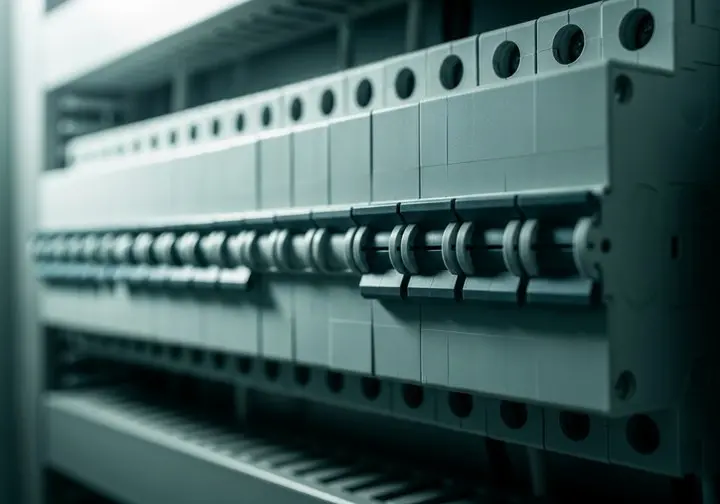
Switch on a bank of power supplies and you may see the lights dim, a breaker trip, or a relay contact arc. The culprit is inrush current — a short, sharp surge as the supply charges its input capacitors from empty.
Why it happens
At the instant of switch-on, the bulk capacitors inside a supply look almost like a short circuit. For a few milliseconds the supply can draw many times its normal running current — a 100 W unit that sips half an amp when running might gulp 20 A or more on the first cycle. It is over in the blink of an eye, but it is real.
Why it matters
- Nuisance tripping — a type-B breaker sized for the running load can trip on the surge. Type-C or type-D curves tolerate inrush far better.
- Contact damage — switches and relays that make the circuit can arc or weld if they are not rated for the peak.
- Stacking up — switch ten supplies on at once and their surges add together. The total can be enormous.
How to tame it
- Check the datasheet figure — inrush is usually quoted at a stated mains voltage and cold start. Size your breaker and switchgear above it.
- Stagger the start — sequence large supplies on a few hundred milliseconds apart so their surges do not coincide.
- Pick supplies with inrush limiting — many of ours include an NTC thermistor or active limiter that softens the peak.
Not sure what your switchgear will see? Tell us the supplies and how many and we will help you add up the worst case.