
AGM vs Gel VRLA Batteries: A Practical Comparison
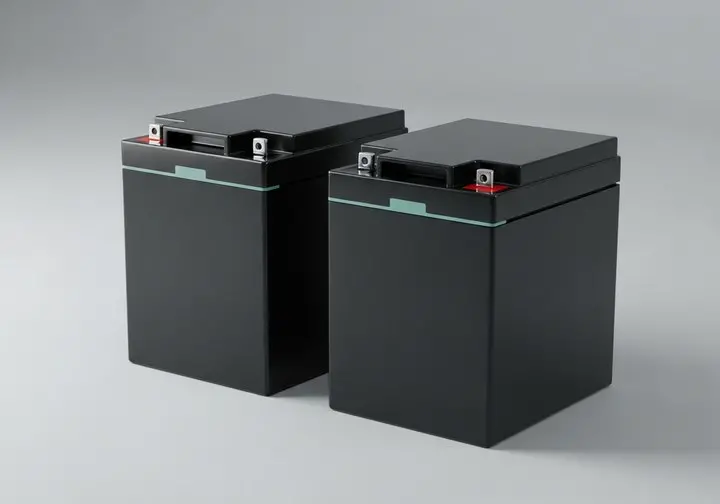
AGM and Gel are both VRLA (valve-regulated lead-acid) batteries: sealed, maintenance-free and safe to mount in almost any orientation. They are often treated as interchangeable - but they behave differently, and choosing the wrong one can cost you cycle life or runtime.
AGM (Absorbent Glass Mat)
In an AGM cell the electrolyte is held in a fine glass-fibre mat between the plates. The construction gives very low internal resistance, which means AGM is good at delivering high current in short bursts.
- Strong high-rate discharge - ideal for UPS and standby duty.
- Low internal resistance, so it recharges quickly.
- Excellent for float applications where it sits charged and waits for a mains failure.
Gel
In a Gel cell the electrolyte is immobilised as a thick gel by adding silica. That construction handles heat and deep discharge far better, at the expense of peak current.
- Robust deep cycling - it tolerates being discharged and recharged repeatedly.
- Better performance in heat and in deep-discharge use.
- Favoured for electric vehicles, mobility, solar storage and other cyclic loads.
How to choose
If the battery mostly sits fully charged and occasionally has to deliver a hard, short burst - a UPS, an alarm panel, emergency lighting - choose AGM. If it is cycled hard, runs warm, or is regularly taken down to a low state of charge - an EV, a mobility scooter, an off-grid store - choose Gel. Match the chemistry to the duty and the battery will repay you with a longer service life.
We stock both AGM and Gel from Haze and LEOCH across a wide capacity range. Browse the battery range or tell us your application and we will recommend the right cell.