
Power Factor Correction: What It Is and When You Need It
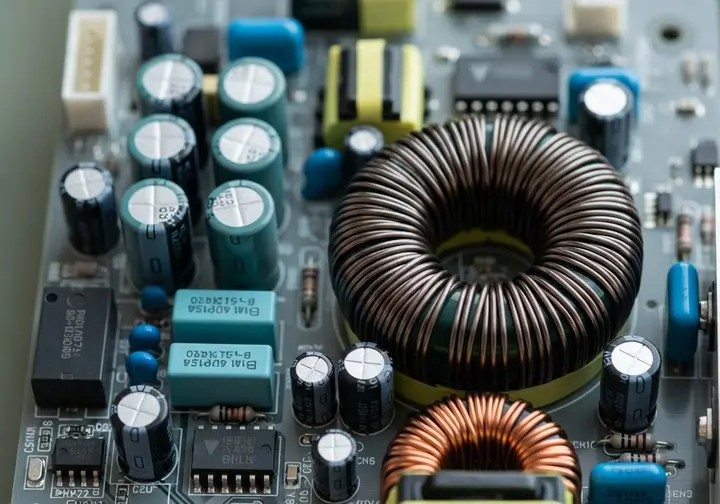
A switching power supply is not a polite load. Without help it draws current from the mains in short, sharp pulses — which wastes capacity and pollutes the supply for everyone else. Power Factor Correction (PFC) fixes that.
What power factor means
Power factor is the ratio of real power (doing work) to apparent power (what the wiring and supply must carry). A poor power factor (say 0.6) means the cabling, breakers and transformer carry far more current than the load actually uses.
What PFC does
Active PFC shapes the input current so it follows the mains voltage smoothly, pushing the power factor up to 0.95–0.99. The result: less current for the same output, lower losses, and a supply that plays nicely on the same circuit as everything else.
When you need it
- Above ~75 W, EN 61000-3-2 sets limits on mains harmonics — active PFC is how supplies meet them.
- On generator or UPS feeds, where a clean current draw avoids tripping or oversizing.
- When many supplies share one circuit and you want to use its capacity efficiently.
Most of our enclosed supplies above 75 W include active PFC as standard. Ask us if you need it confirmed for a particular part.