
Minimum Load: Why Some Supplies Misbehave With Nothing Connected
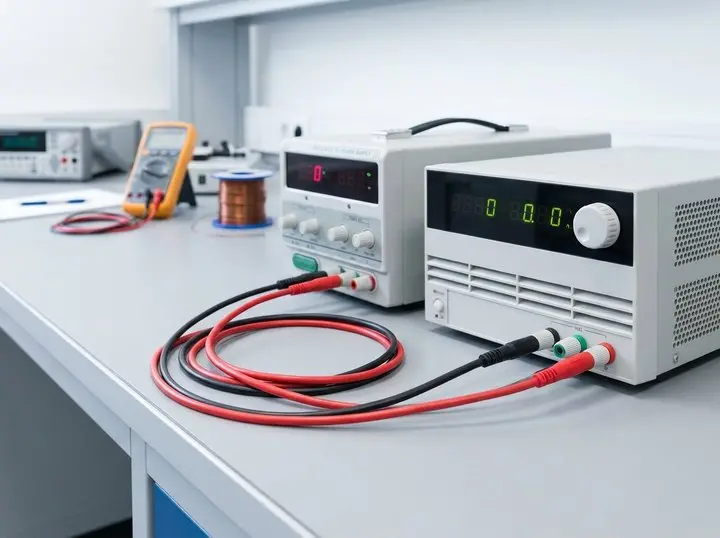
You wire up a new supply, switch on with no load to check the voltage, and see a reading well above nominal — or an output that wanders. Before suspecting a fault, check whether the datasheet states a minimum load.
Why it happens
Some converter topologies rely on a continuous current to keep the control loop in its designed operating region. With no load, energy transferred each switching cycle has nowhere to go, so the output rises until the loop catches it. The result is a voltage above nominal, increased ripple, audible noise from the magnetics, or the supply pulsing as it repeatedly overshoots and waits.
It is most common on unregulated and lightly regulated DC-DC converter modules, where the output voltage is only correct across a defined load range. It is comparatively rare on modern regulated AC-DC supplies, but not unknown.
What to do
- Read the specification first. A stated minimum load, often a percentage of rating, tells you the no-load reading is expected behaviour.
- Test with a representative load rather than an open circuit. A bench check with nothing connected can mislead you in both directions.
- Fit a bleed resistor if your real load can fall below the minimum — for example equipment that sleeps. Size it for the stated minimum and accept the small continuous dissipation.
- Watch intermittent loads. A system drawing full current in bursts and almost nothing between them spends much of its life below minimum load.
If a supply must be stable from zero load, say so when specifying — many regulated converters have no minimum, and we can point you at them.