
DC UPS and Buffer Modules: Riding Through a Dropout
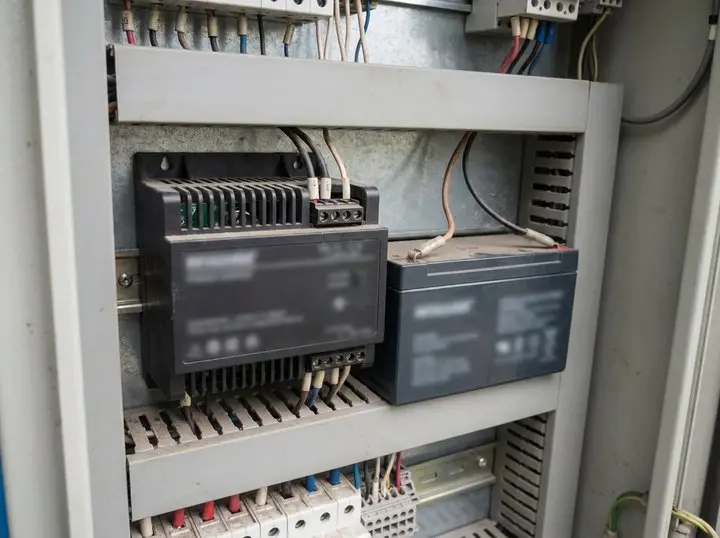
When a brief mains interruption resets a controller, the instinct is to fit a mains UPS. If the equipment at risk runs from a single low-voltage rail, buffering that rail directly is usually the better answer.
The three approaches
- The supply’s own hold-up time. Every supply rides through a short interruption using its internal capacitance — typically a matter of milliseconds at full load, and longer when lightly loaded. Sometimes that is all you need.
- A buffer or capacitor module. Bolted onto the DC rail, it stores energy and releases it when the rail falls. Maintenance-free with no battery to replace, but it holds up for seconds at most.
- A DC UPS with a battery. Minutes to hours, at the price of a battery that must be monitored and eventually replaced.
Choosing between them
The question is what the equipment must actually do during the interruption. Merely surviving a half-second dip needs far less than completing a controlled shutdown, and writing data to storage safely may need only a few seconds. Work out the load current and the time required, and the choice usually makes itself.
Two practical points. A buffer module recharges after an event, so the supply must have headroom beyond the load to refill it — sizing the supply exactly to the load leaves nothing spare. And if a controlled shutdown is the goal, the system needs a signal that the mains has failed, which is why many DC UPS units provide a relay or logic output for exactly that.