
Battery Chargers and Power Supplies Are Not Interchangeable
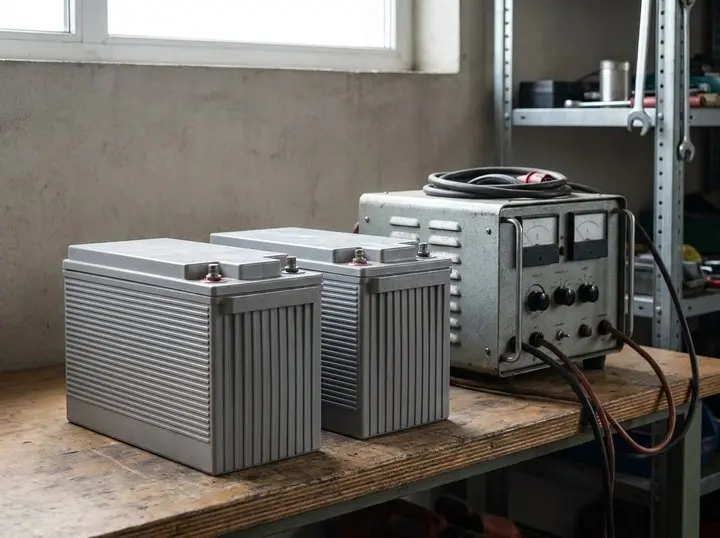
It is a common shortcut: the battery wants 13.8 V, the supply can produce 13.8 V, so wire them together. It will pass current, and for a float application it may even be adequate. As a general practice it shortens battery life and can be unsafe.
What a charger does that a supply does not
- It follows a profile. A proper charger moves through bulk, absorption and float stages, changing its target voltage as the battery accepts charge. A fixed-voltage supply holds one point for ever, which either undercharges or slowly overcharges.
- It compensates for temperature. The correct charging voltage for a lead-acid battery falls as temperature rises. Without compensation, a warm battery on a fixed rail gasses and dries out.
- It limits current deliberately. A discharged battery looks close to a short circuit. A supply meeting that will hit its own protection, and repeated hiccup or shutdown cycles are hard on both parts.
- It blocks reverse current. When the input fails, a battery connected to a plain supply can discharge backwards into it.
When a supply is acceptable
For a small float or standby duty, a regulated supply of the right voltage, with a current limit and a series blocking diode, is a legitimate arrangement — but remember the diode drop shifts your float voltage, and there is still no temperature compensation.
Where the line really is
If the battery is there for safety, backup or a duty cycle that regularly discharges it, use a charger designed for the chemistry. If it is a standby cell that rarely does anything, a correctly configured supply may be enough.
See our battery range or ask us what suits your application.