
Starting Into a Capacitive Load Without Nuisance Tripping
A supply that runs happily once started but refuses to come up is usually meeting a load it cannot charge. Downstream bulk capacitance — drive DC links, decoupling banks, filter capacitors across a distributed rail — looks like a short circuit at the instant of switch-on.
Why it trips
The current needed to charge a capacitor is set by how fast the voltage is rising, not by the load’s eventual consumption. A supply ramping its output in a few milliseconds into a large capacitor bank can demand many times its rated current for that moment. It hits its own current limit, the output folds back or hiccups, and the cycle repeats — a supply that appears to be motor-boating rather than failing.
What to do about it
- Check the behaviour of the limit. A supply with a constant-current characteristic will charge the capacitance slowly and get there. One with hiccup or latching protection may never start. This is often the deciding specification.
- Look for a maximum capacitive load figure. Many datasheets state one. It is a real limit, not a formality.
- Stage the load. Bring subsystems up in sequence rather than energising everything at once.
- Add soft-start or inrush limiting at the load, so the rail rises in a controlled way.
- Allow headroom. Sizing on steady-state current alone is what creates the problem.
Confirming the diagnosis
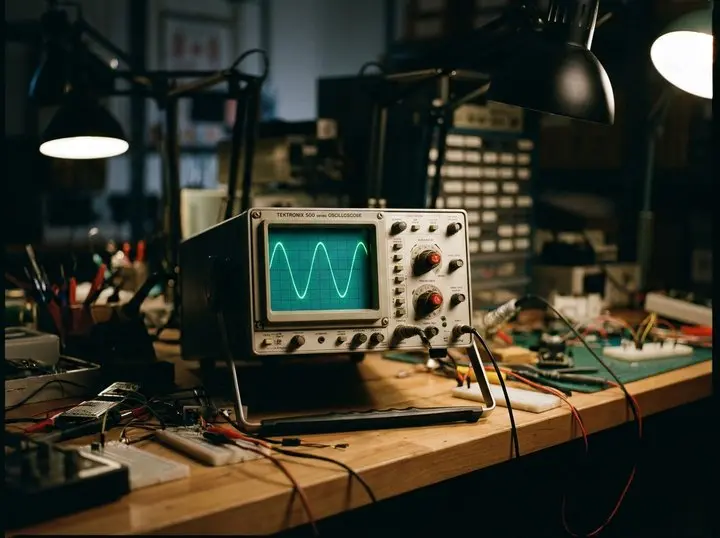
Disconnect the load and start the supply on its own. If it comes up cleanly, the fault is the load profile, not the unit. Watch the output on a scope while it tries to start — a repeating ramp that collapses at the same voltage each time is the signature.
Tell us your capacitance and rise-time requirement and we can recommend a supply that will start into it.