
Back-EMF and Reverse Voltage: Protecting a Supply From Its Load
Most protection discussion concerns the load being protected from the supply. With inductive and motional loads the flow reverses: the load becomes a source, and the supply is on the receiving end.
Two different effects
Switching off an inductive load — a solenoid, contactor coil or valve — produces a voltage spike as the magnetic field collapses. It is brief but can be many times the supply voltage.
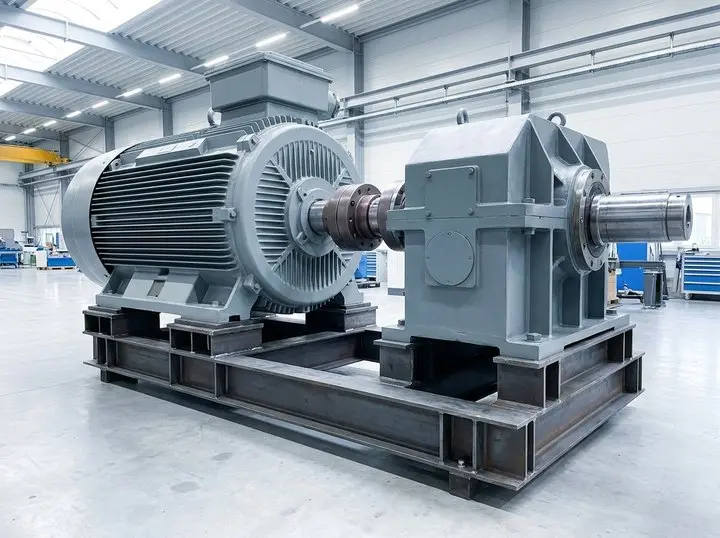
A motor being driven by its own inertia, or lowering a load, acts as a generator and returns energy continuously for as long as the deceleration lasts. This is the more troublesome case: a power supply output is generally not designed to absorb energy, so the rail rises until something intervenes. The usual symptom is the supply’s over-voltage protection shutting the system down every time an axis stops.
Measures that work
- Suppress at the source. A flyback diode across a DC coil confines the spike to the device that caused it. Suppress at the load, not at the supply.
- Give returned energy somewhere to go. Additional bulk capacitance on the rail absorbs modest amounts — check the supply’s maximum capacitive load first.
- Use a brake resistor or regenerative drive where the energy is significant. Capacitance alone will not handle a large or repeated deceleration.
- Block reverse current with a series diode where a supply must never be driven backwards, remembering the forward drop this adds.
Test it properly
Bench tests with a resistive load will not reveal any of this. Exercise the real mechanism, including emergency stops, and watch the rail on a scope during deceleration.
Tell us about the load and we will help you choose a supply that tolerates it.